
The Quicksand Beneath

There’s a pattern in technology that people keep rediscovering and keep being surprised by.
Software eats something.
Then something eats software.
The thing doing the eating always looks inevitable in retrospect and impossible in prospect.
Right now, the something eating software is agents. And the conversation around it has the usual mix of hype and denial that accompanies every phase transition. But underneath the noise, something real is happening — something most people are reasoning about incorrectly.
The mistake people make is thinking this is about products replacing products. SaaS replaced on-prem. Agents will replace SaaS. Draw the 2x2, pick your winners. But that framing misses what’s actually going on. What’s happening is more like a change in the ground itself.
Think about what Claude, Codex, and Gemini actually are. They’re not products competing with your product. They’re the substrate. And that substrate is quicksand.
Quicksand has a specific property that makes it a good metaphor here: it’s not dangerous because it pulls you down. It’s dangerous because it removes the solid ground you were standing on. The models don’t need to build a better version of your SaaS tool. They just need to make the category it sits in slowly irrelevant. The ground dissolves.
And here’s the part most people aren’t thinking about: the model companies need to eat your margins to survive. Training frontier models costs billions. The only way the economics work long-term is if the models capture the value that currently flows to the application layer. This isn’t malice. It’s thermodynamics. They will integrate vertically because they must. Every SaaS margin is a target, not because someone at Anthropic or OpenAI decided to go after it, but because the cost structure demands it.
There’s a concept in physics called self-organized criticality. It was introduced by Per Bak in the late ‘80s, and it describes systems that naturally evolve toward a critical state — a point where small perturbations can cause cascading events of any size.
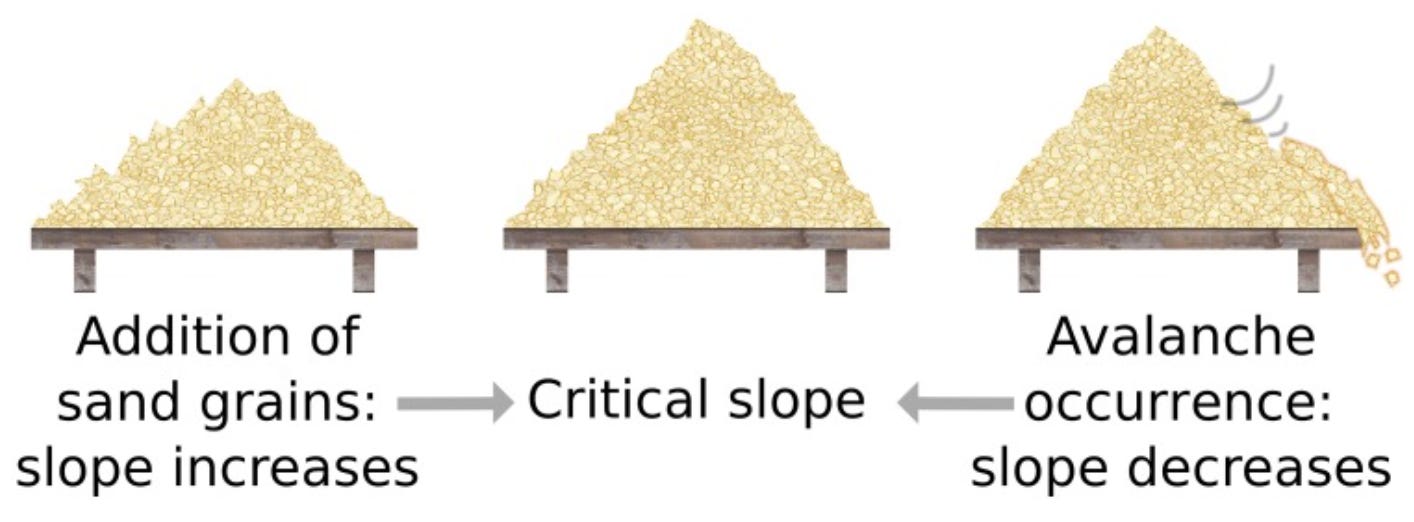
The classic illustration is a sandpile. You keep adding grains of sand one at a time. For a while, nothing much happens. Then the pile reaches a critical slope, and the next grain could cause anything from a tiny slide to a massive avalanche. You cannot predict which. Not because you lack information, but because prediction itself breaks down at criticality.
We are at the critical slope.
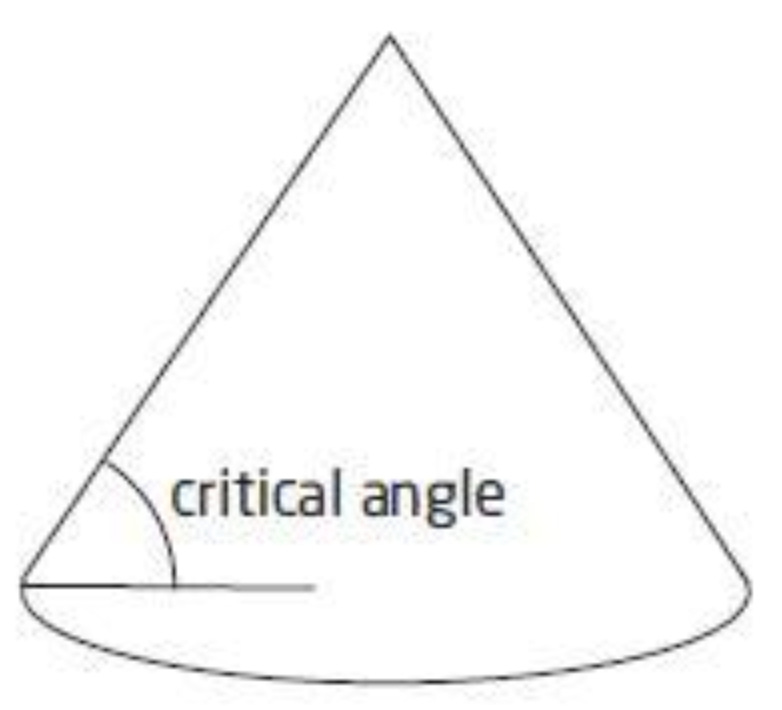
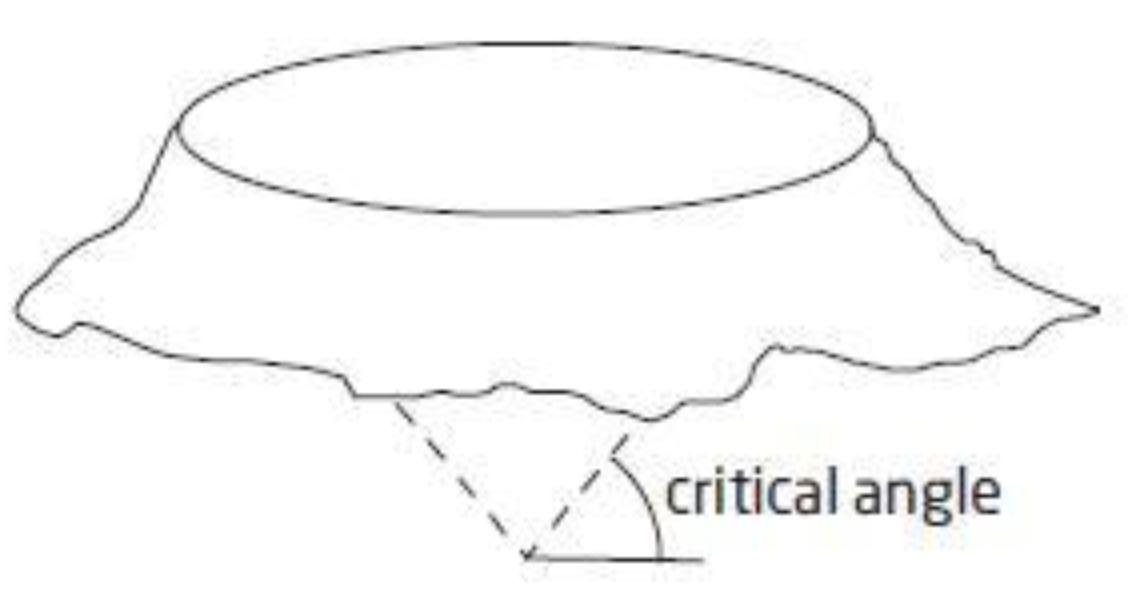
This is what makes the current moment so disorienting. All the usual forecasting tools stop working. You can’t look at market size or competitive dynamics or product roadmaps and reason your way to what happens next. The analysts writing reports about which SaaS companies will survive are doing the equivalent of predicting which grain of sand will cause the avalanche. The question isn’t even wrong — it’s the wrong kind of question.
At phase transitions, you don’t get to predict. You get to observe who dies and who survives, and then you extract lessons. The lessons come after, not before.
But this isn’t nihilism. There’s a different lesson from biology that’s useful here.
Every organism alive today is the descendant of an unbroken chain of ancestors who survived every extinction event, every climate shift, every predator, every famine, for 3.8 billion years. Not because they were the strongest or the smartest, but because they could molt.
Molting is an under-appreciated strategy. A snake doesn’t become a different animal. It sheds the skin that no longer fits. A lobster doesn’t redesign itself. It breaks out of its own shell when the shell becomes a constraint. The organism persists by periodically destroying the thing that protected it.
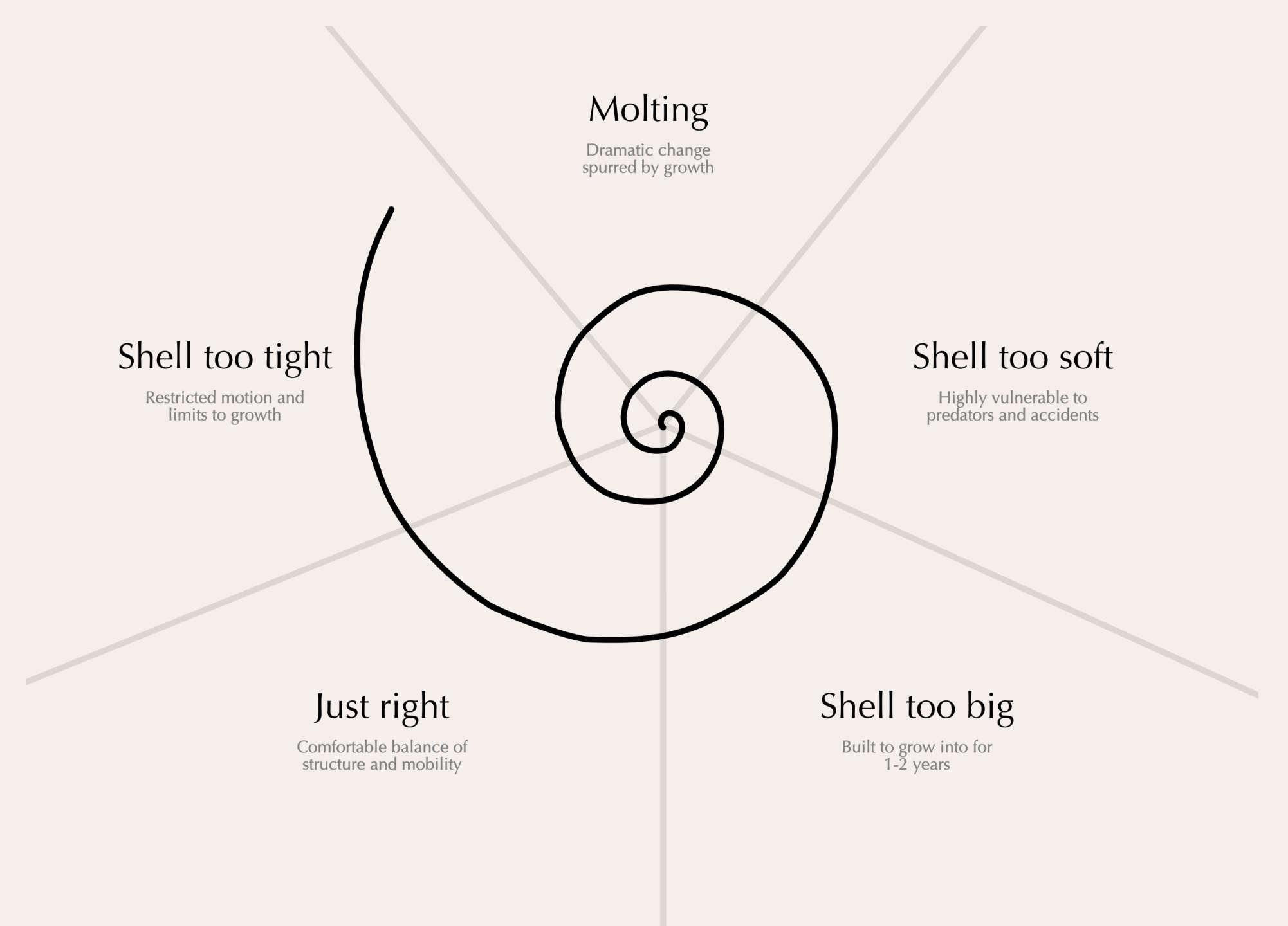
The companies that survive this transition will be the ones that molt. Not pivot — that implies becoming something else. Molt. Keep the core competence, shed the form factor. Your insight about customer workflows is valuable. Your SaaS dashboard is not. Your data moat matters. Your pricing page doesn’t.
The ones that die will be the ones that confuse the shell for the organism. They’ll defend the form factor — the seats, the subscriptions, the feature comparison charts — while the substrate dissolves beneath them.
Here’s the thing nobody wants to say plainly: what’s dying isn’t just a category of software. It’s a category of employment, a category of company, a category of career.
Every previous technology transition had this property. The automobile didn’t just kill the horse-drawn carriage industry. It killed the blacksmith, the stable hand, the hay merchant, the harness maker. It killed an entire economic ecosystem that had organized itself around the horse. And the people in that ecosystem didn’t see it happening, because they were optimizing within their category instead of noticing that the category itself was evaporating.
We’re in the eye of the storm right now. That’s the strange thing about criticality — the center can feel calm. People are still getting hired. SaaS companies are still growing revenue. Meetings are still happening.
But the phase transition doesn’t ask your permission and it doesn’t wait for you to be ready.
So what do you actually do?
First, stop predicting. At criticality, prediction is a form of self-deception. The person who says “agents will never replace real enterprise software” and the person who says “every SaaS company will be dead in two years” are making the same mistake: they’re treating a phase transition like a linear trend.
Second, be in learning mode, not execution mode. The instinct in a crisis is to act — ship faster, sell harder, cut costs. But at a phase transition, the most valuable thing you can do is observe.
Watch what dies. Watch what survives. Watch the early signals, because the lessons from the first casualties will be worth more than any strategy deck.
Third, understand what you actually are versus what you currently look like. Are you a company that helps people manage projects, or are you a company that sells project management software? Those sound like the same thing, but they’re not. The first survives the transition. The second is the shell.
Fourth, pay attention to the quicksand companies. Claude, Codex, Gemini — watch what they absorb next. Not because you can prevent it, but because the pattern of absorption will tell you where solid ground still exists. The things they’re slow to absorb are the things with real defensibility. The things they absorb fast were always just features pretending to be products.
Every living thing dies. This isn’t pessimism; it’s the precondition for evolution. The question was never whether SaaS would die. The question is what molts fast enough to survive in the next environment.
We tend to think of technology transitions as stories about winners. But at the moment of criticality, they’re really stories about survival. The winners only become visible after the avalanche settles. Right now, we’re all just grains of sand.
The only honest thing to do is to stay awake.